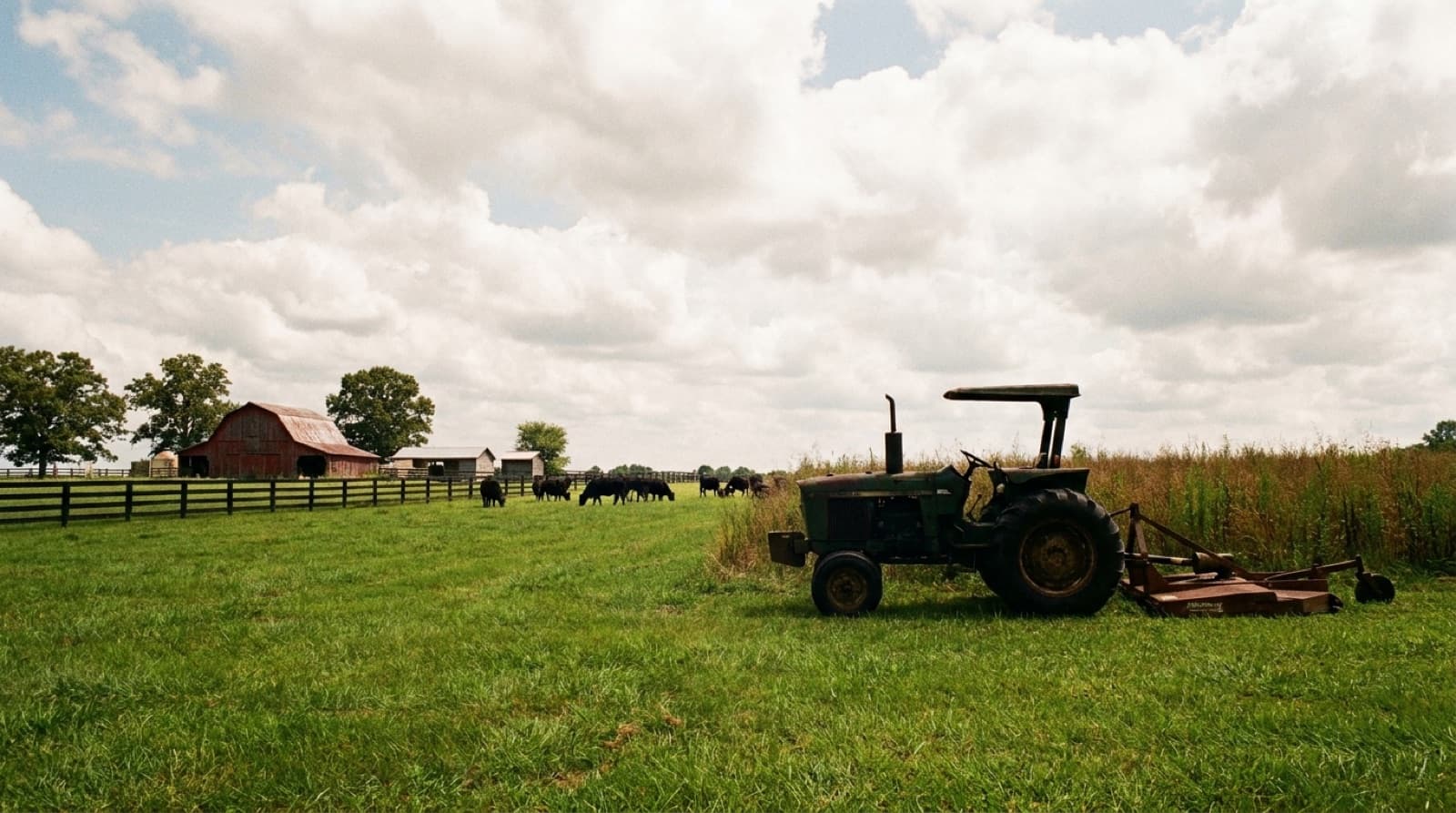
Pasture Reclamation in Huntsville, AL. Take Your Grazing Land Back.
That field used to carry cattle. Now it's cedar, privet, and blackberry from fence to fence. The grass is still under there. Getting it back costs less than buying an acre of new ground ever will.
Prefer to talk? (256) 973-8415Rocket City Land Clearing reclaims overgrown pasture across Huntsville, Madison, and North Alabama for cattle, horse, and hay operations. We mulch the cedar, privet, blackberry, and scrub that took the field, grinding it into the surface so the ground goes back to grass instead of into burn piles. Written fixed price before equipment rolls; most projects start within one to two weeks.
Serving Huntsville, Madison, Athens, Decatur and all of North Alabama. · Updated August 2026
How a Working Pasture Turns Into Scrub.
No pasture goes under all at once. It starts at the fence lines and wet corners: a few cedars nobody cut, blackberry canes where the mower didn't reach. Miss two bush-hogging seasons (a drought year, an equipment year, a busy year) and the woody stuff gets ahead of anything a rotary cutter can handle.
By year five, succession is running the field. Eastern red cedar shades out forage in widening circles. Privet moves in from the drainage and doesn't stop. Blackberry knits it all together into a wall livestock won't push through and you can't mow. The field that carried stock for decades is now carrying brush.
Every year it sits, the reclamation gets more expensive and the stems get thicker. The good news: the ground under that mess is still pasture ground. It grew grass before. It will again.
Why Mulching Beats Dozing for Pasture Ground.
The old way to reclaim a field was a bulldozer and a match: push everything into windrows, burn what burns, and spend the next two years fighting the gullies and bare subsoil the dozer left behind. On land you plan to graze, that trade is worse than it looks. Your topsoil and your established root mat are the pasture.
Mulching reclaims the field without unbuilding it. The machine grinds cedar, privet, and blackberry into the surface right where they stand. The topsoil stays. The grade stays. There are no windrows eating three acres of your field, no burn piles smoking next to your neighbor's horse barn, no root balls to pick out of the first three hay cuttings.
The ground comes out ready to move forward: mulch breaking down into the soil, field open to sunlight, and the surface workable for whatever your forage plan calls for next.
- Topsoil and root mat stay intact, so the ground stays pasture ground
- No burn piles, burn permits, or windrows taking up field space
- Cedar, privet, and blackberry ground in at surface level
- Fence lines and field edges cleaned in the same pass
- Mulch layer feeds the soil as the field transitions back to forage
Built Around Livestock, Fences, and the Way Farms Actually Run.
Reclaiming a working farm isn't the same as clearing an empty lot. There are horses in the next paddock, cattle on the other side of a single-strand hot wire, and a fence you'd rather not rebuild. We plan the work around your operation: which fields first, where the machine enters, what stays hot and what gets moved.
Fence lines get particular attention, because that's where reclamation is won or lost. Brush along the wire is how privet reseeds a clean field and how you lose a fence to falling cedar. We mulch the lines clean so you can see wire, walk posts, and keep the next invasion from staging at the edges.
Shade trees stay. Good oaks in a pasture are livestock infrastructure, and you flag every keeper during the walkthrough before the machine starts. If privet has the field, we're also hitting root structure on the pass, knocked back at the crown, not trimmed to return.
What Pasture Reclamation Costs, and What Drives It.
Pasture reclamation is priced by the job, and three things drive it: how far succession has gone (waist-high blackberry prices differently than ten-year cedar), how many acres are in play, and the ground itself, since bottomland fields work faster than rocky hillside pasture. As a bearing point, our forestry mulching typically runs $1,600 to $3,000 per acre in the Huntsville area, with steep ground starting around $2,000.
Weigh that against the alternative you already know: pasture rent or bought ground, every year, while your own acres sit under brush. Reclaiming ground you own is a one-time cost that pays back every grazing season after.
Getting a real number takes two minutes with the instant online estimate. A free walkthrough turns it into a written fixed price (the quote is the invoice), and we do a final walkthrough with you across every reclaimed acre before the job is called done.
Pasture Reclamation Questions, Answered.
How much does it cost to reclaim an overgrown pasture in North Alabama?
It depends on how far the overgrowth has progressed, total acreage, and terrain. Comparable forestry mulching in the Huntsville area typically runs $1,600 to $3,000 per acre, with steep ground starting around $2,000. Every project gets a written fixed price before equipment rolls.
Can cattle or horses graze the field right after mulching?
The field is open and walkable when we leave, but the grazing timeline depends on your forage plan: whether existing grass recovers on its own or you reseed. We'll walk the field with you at completion so you can plan stocking around what your ground needs.
Will mulched cedar and privet grow back in my pasture?
Cedar doesn't resprout from the stump, so ground-level mulching removes it for good. Privet will try to return from roots and seed. We grind crowns at surface level and recommend follow-up root-zone treatment for heavy privet, then regular mowing keeps the field ahead of anything new.
Is mulching better than bulldozing for pasture reclamation?
For ground you intend to graze, yes. Dozing strips topsoil and root mat into piles and leaves bare subsoil that erodes and grows weeds first. Mulching keeps the soil profile intact and leaves the surface ready to go back to forage: no burn piles, no windrows, no root balls in your hay field.
Can you clear brush along my fence lines without damaging the fence?
Yes. Fence lines are precision work. We walk them with you first, flag the wire and posts, and mulch the brush tight to the line without touching the fence. Clean lines are also your best defense against privet reseeding the field from the edges.
How long does it take to reclaim a pasture?
A commercial mulcher typically works 1 to 3 acres per day depending on growth density and terrain, and most projects start within one to two weeks of a signed quote. Your written quote includes the expected duration for your specific fields.
Get your pasture reclamation quote.
Tell us what you're working with. We'll walk the site, flag what stays, and hand you a written fixed price with a start window.
Or send the details now.
Two fields and a sentence is enough, we'll take it from there.