Privet and Kudzu Removal in Huntsville, AL. This Time, It Doesn't Come Back.
You've cut it before. It came back thicker. Kudzu, privet, and honeysuckle don't die from cutting. They die when you destroy what's underground. That's the job we do.
Prefer to talk? (256) 973-8415Rocket City Land Clearing removes invasive vegetation (kudzu, Chinese privet, and Japanese honeysuckle) across Huntsville, Madison, and North Alabama. Our approach pairs one-pass forestry mulching, which destroys the above-ground structure and grinds crowns at soil level, with targeted root-zone treatment to stop regrowth. Typical invasive removal runs $1,700 to $3,000 per acre, with a written fixed price before any work starts.
Serving Huntsville, Madison, Athens, Decatur and all of North Alabama. · Updated August 2026
Know the Enemy: What You're Actually Fighting.
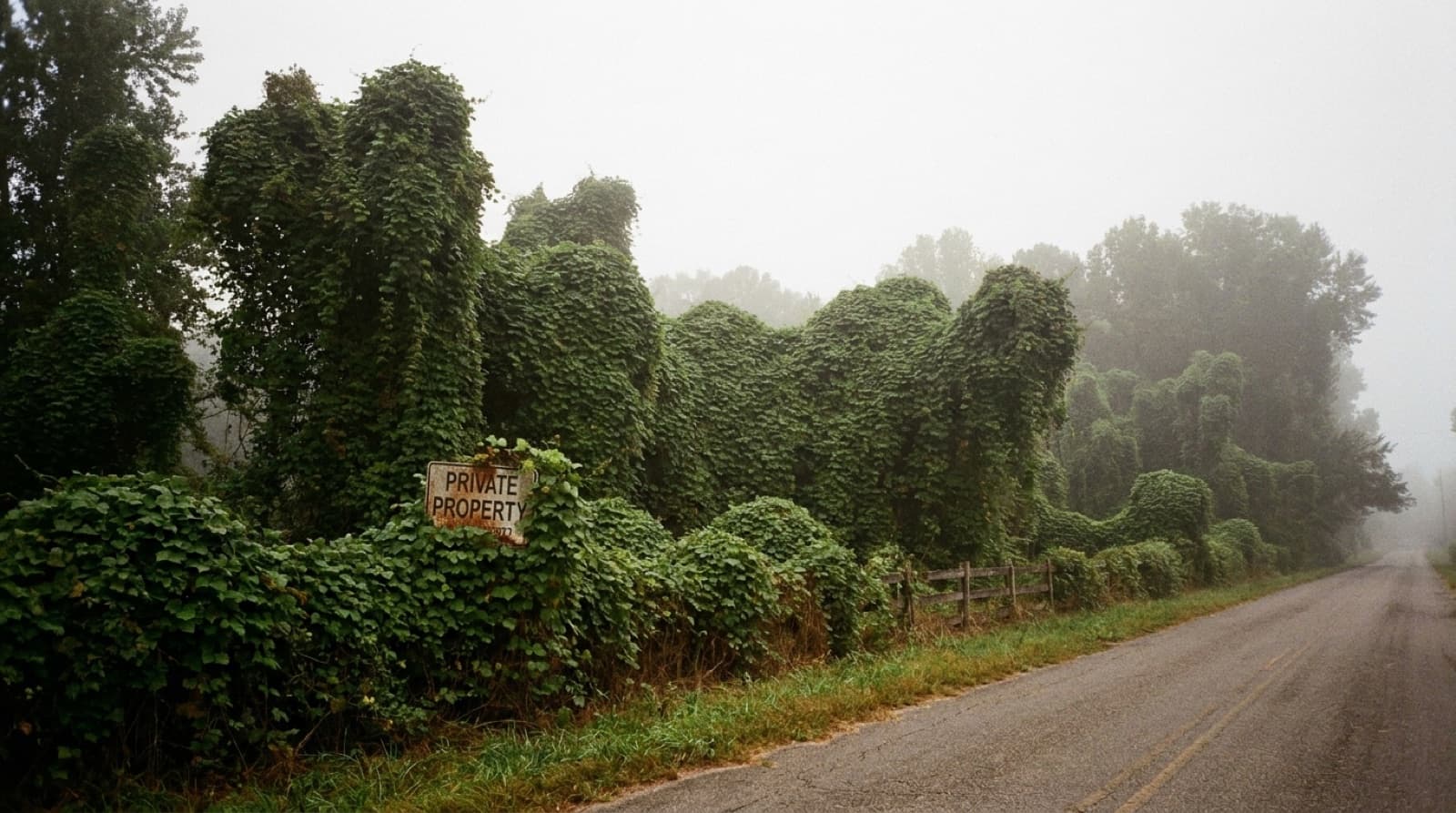
Kudzu grows up to a foot a day in an Alabama summer. It doesn't compete with your trees. It buries them, blanketing whole canopies until the tree underneath starves for light and dies standing. What you see above ground is the cheap part; the vine runs from massive root crowns that can push out new growth for years.
Chinese privet is quieter and worse. It seeds by the thousands, thrives in shade where nothing else will, and forms thickets dense enough to stop a grown man. Left alone, it doesn't share the understory. It becomes the understory, and everything native underneath it dies out.
Japanese honeysuckle finishes the job. It climbs and girdles young trees, mats over the ground, and holds its leaves deep into winter, shading out anything that tries to grow back. All three plants have one thing in common: their real strength is underground, in root systems built to survive being cut.
Why Cutting It Back Has Never Worked.
Every Huntsville property owner fighting kudzu or privet has run the same play: bush-hog it, weed-eat it, maybe burn it. And every one of them has watched it return the following spring, usually thicker.
Here's why. Cutting removes leaves and stems, which is the part the plant can afford to lose. The root crowns and energy reserves underground are untouched, and cutting actually signals the plant to push new shoots, more stems than it had before. You're not killing it. You're pruning it. Privet cut at the trunk resprouts from the stump in multiples. Kudzu mowed in June is back over the fence by August.
That's the cycle: cut, regrow, cut, regrow, every year, forever, paying in weekends or contractor invoices for a result that expires in months. The only exit is to stop attacking the part of the plant that grows back and start attacking the part that can't.
- Mowing and bush-hogging leave root crowns intact, so regrowth is guaranteed
- Cut privet resprouts from the stump, multiplied
- Kudzu roots store energy reserves that survive years of cutting
- Burning clears the surface and leaves the root system untouched
- Every repeat cut is money spent renting the problem, not solving it
The Mechanism: Grind the Crown, Treat the Root Zone.
Our removal process attacks the plant where it lives. First pass: the forestry mulcher shreds the entire above-ground structure (vines, stems, thicket) and grinds the crowns at ground level. This is categorically different from cutting. The crown is the plant's regrowth engine, and grinding it destroys the structure the plant needs to rebound, in a single pass.
The shredded material stays on the ground as a dense mulch layer that blocks light from the seed bank privet leaves behind, so the next generation can't germinate into open soil.
Then the follow-up: targeted treatment of the root zone to finish what the machine started. Kudzu and privet are survivors. The mulching knocks them down hard, and the root-zone treatment is what keeps them down. We walk you through the options and timing during the site visit, matched to what's actually growing on your property.
What Invasive Removal Costs in Huntsville.
Invasive vegetation removal in the Huntsville area typically runs $1,700 to $3,000 per acre. What moves the number: how established the infestation is (first-year privet prices differently than a decade-old thicket), how steep and accessible the ground is, and how much of the property the invasives have taken.
Two minutes with the instant online estimate gets you a real number for your acreage. A free walkthrough turns it into a written fixed price before any equipment rolls, and most projects start within one to two weeks. Compare that once to what you've spent cutting the same kudzu three summers running. This is the cheaper fight.
Invasive Vegetation Removal Questions, Answered.
How do you permanently get rid of kudzu in Alabama?
You have to destroy the root system's ability to regrow, not just the vines. Our approach grinds the above-ground growth and root crowns with a forestry mulcher in one pass, then treats the root zone to exhaust regrowth. Cutting or mowing alone will not kill kudzu. Its underground reserves are built to survive it.
Why does privet keep coming back after I cut it?
Because cutting leaves the stump and roots alive, and privet responds by resprouting in multiples. It also drops thousands of seeds that germinate in disturbed soil. Killing it requires destroying the crown at ground level and blocking the seed bank, which is what mulch-in-place removal plus root-zone treatment does.
How much does kudzu or privet removal cost per acre in Huntsville?
Typical invasive vegetation removal in the Huntsville area runs $1,700 to $3,000 per acre, depending on how established the infestation is, the terrain, and site access. Every job gets a written fixed price before work starts. The quote is the invoice.
What time of year is best to remove kudzu and privet?
Mulching works year-round, and there's no season worth waiting for while kudzu grows up to a foot a day in summer. Follow-up root-zone treatment has timing considerations depending on the species, and we build that schedule into your plan during the site visit.
Will invasive removal hurt the trees I want to keep?
No. Before the machine starts, we walk the property with you and flag every keeper: hardwoods, dogwoods, anything you want saved. The mulcher removes the invasive growth around them. Freeing a tree from kudzu or honeysuckle is usually what saves it.
Can I just burn kudzu off my property?
Burning removes surface growth and leaves the root crowns fully alive. The kudzu returns, often faster, into the cleared ground. You also take on burn permits, smoke, and liability. Grinding the crowns and treating the root zone kills the plant; fire just resets it.
Get your invasive vegetation removal quote.
Tell us what you're working with. We'll walk the site, flag what stays, and hand you a written fixed price with a start window.
Or send the details now.
Two fields and a sentence is enough, we'll take it from there.